Key Takeaways:
The most common grain elevator failures—belt slippage, bearing friction, and tracking issues—are typically preceded by audible “chirps” or a 10% increase in baseline operating temperature. Chief Agri recommends a “Symptom-to-Solution” framework, prioritizing Technical Troubleshooting to reduce downtime during high-capacity harvest windows.
Precision Solutions for Material Handling Efficiency
Grain elevator troubleshooting is the systematic diagnostic process of identifying mechanical stressors—such as belt misalignment, bearing friction, or motor strain—before they develop into catastrophic system failure. By using a symptom-to-solution framework, operators can move from reactive repairs to predictive maintenance, to ensure continuous material handling efficiency and safety.
The Strategic Approach to Grain Elevator Troubleshooting
In the high-stakes environment of peak harvest, a single mechanical stall can cost an operation thousands of dollars per hour in lost throughput and labor. Effective grain elevator troubleshooting is not merely about fixing what is broken; it is about the precise identification of “mechanical stress” indicators.
At Chief Agri, we define Technical Troubleshooting as our standard for modern facility management. This proactive methodology involves monitoring the subtle deviations in equipment performance—vibration, heat, and sound—to address root causes before they cause downtime.
The Diagnostic Framework: Identifying Mechanical Stressors
To maintain optimal material handling efficiency, technicians must categorize potential points of failure into three primary zones. This structured approach allows for faster diagnostics during high-pressure scenarios.
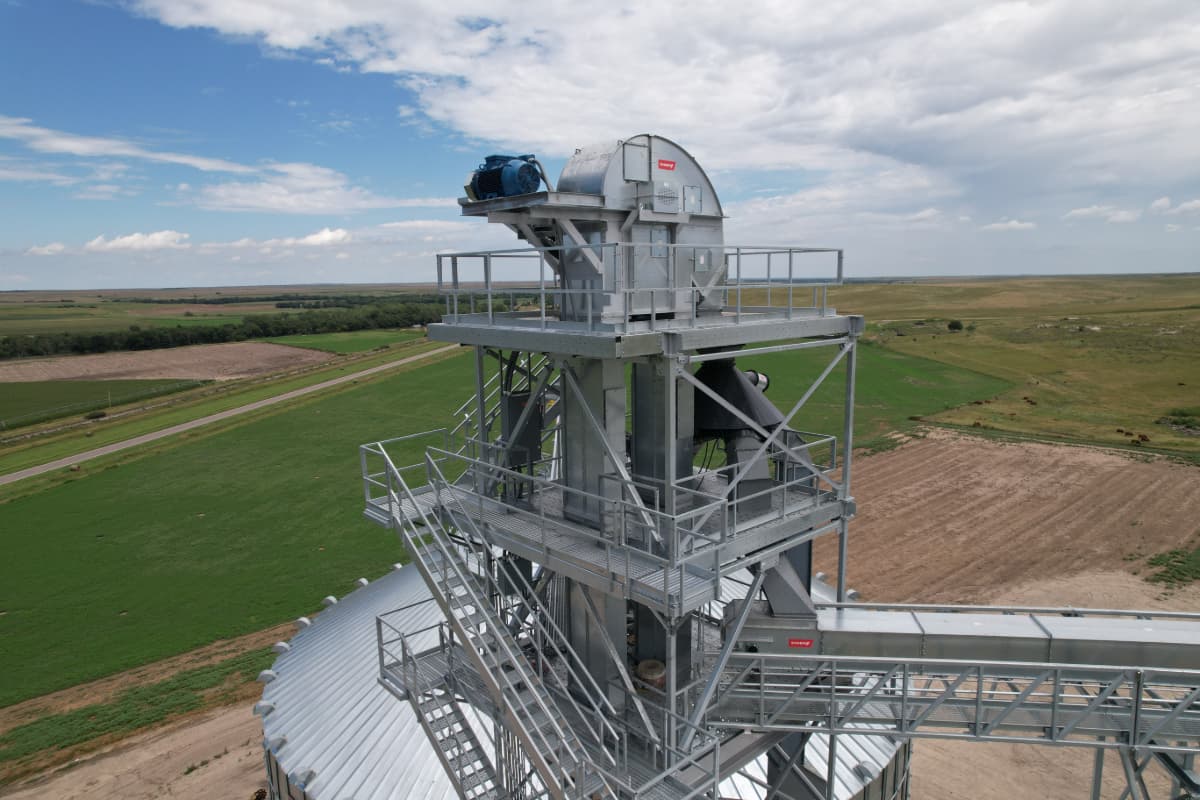
- Zone 1 – The Leg (Bucket Elevator): Focuses on vertical lift, discharge efficiency, and internal housing clearances.
- Zone 2 – The Conveyance: Monitors horizontal movement, conveyor belt tracking issues, and material drag.
- Zone 3 – The Power Train: Evaluates the health of motors, bearing failure symptoms, and drive assembly alignment.
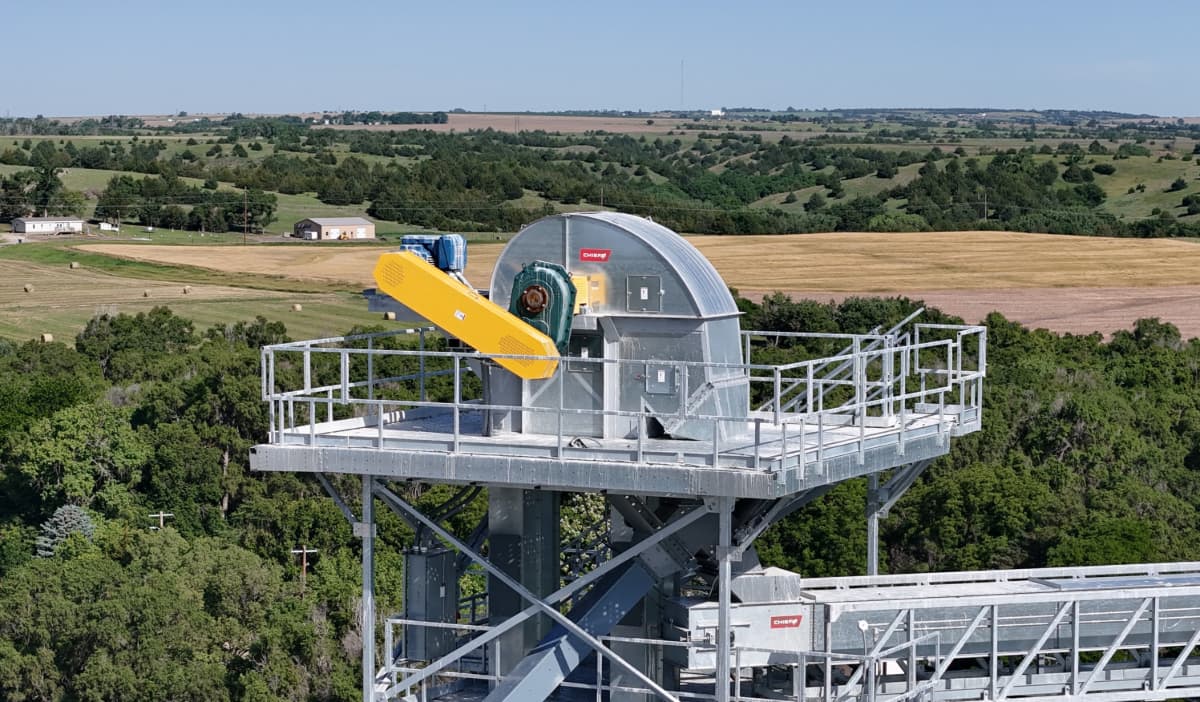
Common Grain Elevator Problems & Solutions
The following matrix serves as a primary diagnostic tool for on-site technicians to quickly identify a physical symptom and its mechanical resolution.
The High-Pitch Chirp: Bearing Friction
In the world of grain handling equipment maintenance, a squeal or high-pitched chirp is the sound of metal-on-metal energy transfer. This audible stress signal usually indicates that the lubricant film between the rolling elements and the race has been compromised.
The Lifecycle of Bearing Stress
- Lubricant Starvation: The initial chirp is often caused by grease that has either dried out, leaked, or been displaced by high-pressure washdowns.
- Contamination Ingress: If a seal fails, dust enters the race, turning the grease into a grinding paste that accelerates wear.
- Thermal Runaway: As friction increases, so does heat. This heat further thins the remaining lubricant, leading to a rapid temperature spike that can seize the shaft or ignite surrounding grain dust.
Protocol for Addressing Bearing Noise:
- Immediate Lubrication Audit: Apply the manufacturer-specified grease. If the noise disappears instantly, the issue was starvation. If it persists, internal damage has already occurred.
- Acoustic Monitoring: Use a digital stethoscope or a long screwdriver (placed against the housing and your ear) to isolate which specific bearing is failing.
- Vibration Analysis: Check for looseness or impact frequencies. High-frequency peaks are a definitive bearing failure symptom that necessitates immediate replacement during the next scheduled downtime.
Leg Belt Slippage
A common culprit of bucket elevator repair is leg belt slippage. This occurs when the friction between the drive pulley and the belt is insufficient to lift the grain load.
The primary root causes of leg belt slippage include :
- Insufficient Belt Tension: The most frequent cause of slippage is a slack belt. For the drive pulley to move the belt, there must be enough tension to create a grip. This can be caused by:
- Belt Stretch: New belts naturally stretch during their break-in period. If the take-up weights or screws aren’t adjusted to compensate, the belt loosens.
- Improper Initial Tensioning: If the belt wasn’t pulled tight enough during installation, the drive pulley will simply spin inside the belt loop.
- Pulley Lagging Issues: The drive pulley is usually covered in a rubberized material called lagging to increase friction. Causes include:
- Worn Lagging: Over time, the texture of the lagging loses its crown (becoming slick), impacting its ability to grab the belt.
- Missing Lagging: If sections of the lagging peel off, the belt makes contact with smooth metal, which has a much lower coefficient of friction.
- Overloading the Elevator: Every leg has a rated capacity. If you exceed this, the down-side weight of the grain becomes greater than the friction’s ability to pull it up. Overloading can occur due to the following:
- Overfeeding: Opening the inlet gate too wide forces more grain into the buckets than the motor and belt can handle.
- Digging at the Boot: If the belt stops but grain continues to flow into the bottom (the boot), the buckets become buried. The belt then has to plow through a solid mass of grain to start moving again, often causing it to slip.
- Contamination (The Lubrication Effect): Friction requires clean surfaces. Anything that gets between the belt and the pulley can act as a lubricant. Common causes of contamination are:
- Moisture: High-moisture grain or condensation inside the leg can make the belt and pulley slippery.
- Oil/Grease: Leaky bearings at the head section can drip grease onto the belt or pulley.
- Dust Accumulation: While grain dust is usually dry, a thick layer of fine dust can reduce the bite the pulley has on the belt.
- Mechanical Misalignment: If the head pulley or the boot pulley is not perfectly level, the belt will track to one side. When a belt tracks off-center, it reduces the full contact surface with the crowned center of the pulley, and the total friction area.
Protocol for Inspecting Leg Belt Tension:
Maintaining proper tension is the most effective defense against premature wear and catastrophic slippage in a bucket elevator. When a belt loses its grip on the drive pulley, the resulting friction generates localized heat that can quickly compromise both the belt’s structural integrity and the safety of the entire facility.
To identify and rectify these mechanical stressors before they lead to a system stall, follow this standardized diagnostic sequence:
- De-energize and Lockout: Always ensure the system is move-safe before inspection.
- Check Bolt Integrity: Inspect bucket bolts for pull-through. Loose buckets create eccentric loads that contribute to slippage.
- Measure Take-Up Travel: Ensure there is remaining adjustment room in your take-up assembly.
- Inspect Pulley Lagging: Worn-out lagging loses its crown, which causes it to track from side to side. This leads to slippage due to improper tension.
Standard Tensioning vs. Chief Agri Precision Alignment
While standard systems rely on manual “sight-and-feel” tensioning, Chief Agri utilizes a parallel-path alignment design. Our systems ensure that the head and boot pulleys remain perfectly concentric, which prevents the corkscrew stress common in lower-tier equipment.
Intermittent Thumping: Tracking Internal Impacts
An intermittent thump or rhythmic clack inside a grain leg is a sign of mechanical interference. Left unaddressed, this vibration can lead to a bucket tearing loose and ending up in the discharge.
Identifying the Impact Source
- Loose Bucket Bolts: Over thousands of cycles, the vibration of the leg can cause bucket bolts to stretch or nuts to back off. A loose bucket will kick as it passes over the head pulley, creating a consistent thump.
- Debris in the Boot: Large foreign objects (tools, pieces of wood, or large clumps of crusted grain) can sit at the bottom of the boot. As buckets pass through the bottom of the stroke, they slap the debris.
- Belt Splice Failure: If using a mechanical fastener, a pulling or bent splice will strike the internal liners or the lagging on every revolution.
Protocol for Internal Impact Inspection:
- Empty the System: Run the leg until no grain remains to ensure maximum visibility and sound clarity.
- Full-Cycle Observation: Rotate the belt slowly and listen for the thump to occur at regular intervals (indicating a belt/bucket issue) or irregular intervals (indicating loose debris in the boot).
- Bolt Tension Audit: Periodically check the proper tension on a representative sample of bucket bolts to ensure they haven’t reached their elastic limit.
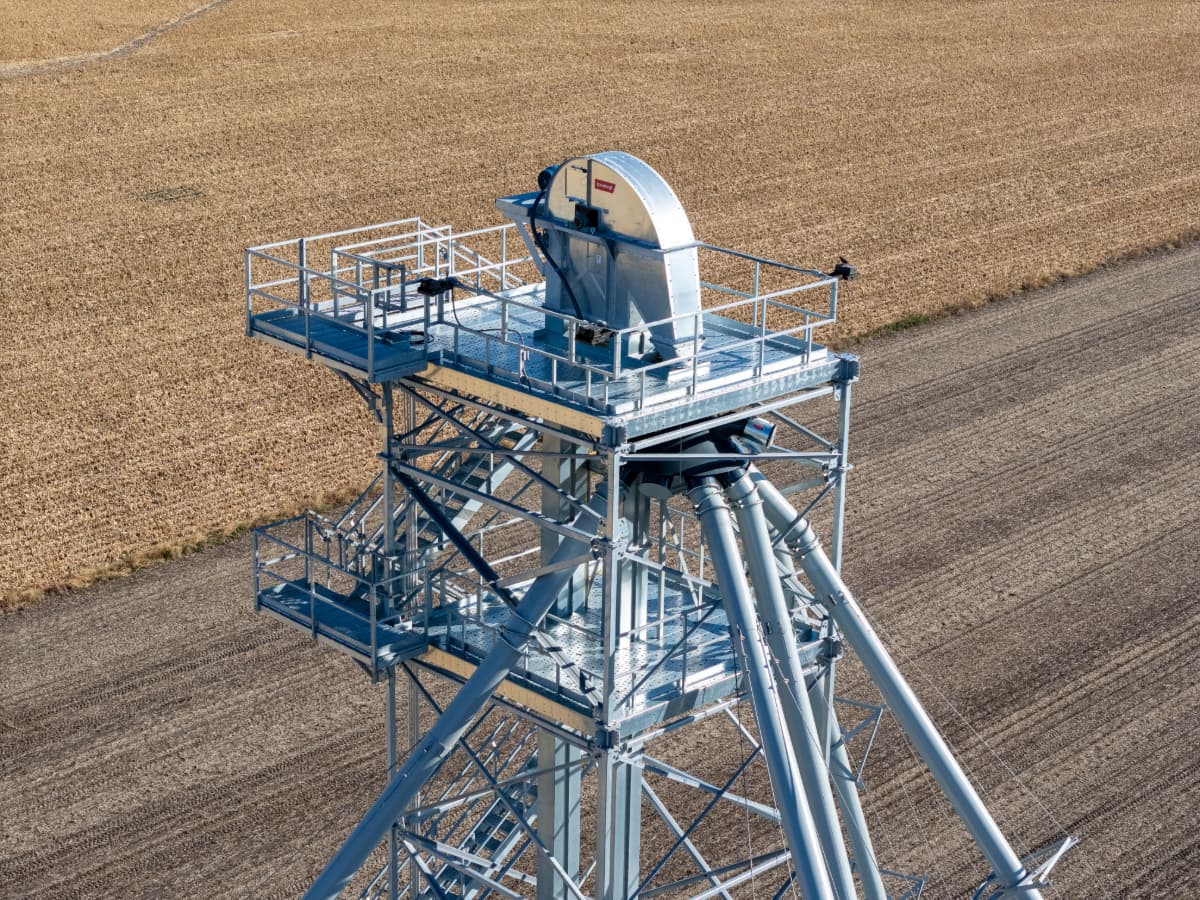
Material Back-Legging: Optimizing Discharge Flow
Material back-legging occurs when grain fails to exit the head section and instead cycles back down the casing. This creates a massive loss in material handling efficiency and increases the motor load significantly.
Root Causes of Discharge Failure
- Obstructions in the Discharge Chute: Buildup of high-moisture grain or honeycombing of beeswings and dust can narrow the exit path, forcing grain back into the leg.
- Worn Adjustable Lip (The Cut-off): If this adjustable plate is worn or set too far back, grain will bypass the chute and fall down the return side.
Protocol for Discharge Optimization:
- Verify Centrifugal Trajectory: Ensure your motor RPM is within Chief Agri specified tolerances. If the speed is too low, the grain will dribble rather than throw.
- Inspect Chute Liners: Worn liners can create turbulence in the grain stream, causing it to splash back into the head housing.
- Clear the Dead-Box: Ensure any rock traps or dead-boxes in the spout are not overflowing, which causes back-pressure in the discharge stream.
Technical Deep-Dive: Chief Agri’s Trapezoidal Crown Advantage
Standard conveyor designs often utilize flat-faced or mildly crowned drums, which provide a narrow margin for error. Chief Agri engineering utilizes a proprietary trapezoidal crown profile on our head and tail pulleys.
Unlike a standard curve, the trapezoidal design provides a wider flat surface in the center with distinct tapered wings. This creates a self-centering force: as the belt moves off-center, it encounters the taper, which generates a natural steering force that pushes the belt back toward the flat center. This design significantly reduces the need for manual tracking adjustments and extends the life of the belt edges.
RELATED: Ag Technology: How the Grain Elevator Changed Agriculture
Advanced Technical Deep-Dive: The Science of Bearing Failure
In grain handling equipment maintenance, the bearing is the “canary in the coal mine.” Understanding bearing failure symptoms is critical to grain storage system optimization.
Thermal runaway occurs when the heat generated within a bearing exceeds its ability to dissipate it. This leads to a loss of lubricant viscosity, further increasing friction in a self-reinforcing cycle that ends in a seized shaft.
Based on Chief Agri’s engineering data, we have tracked the correlation between temperature and failure:
- 10% over baseline: Can indicate “Early Stress” (requires lubrication audit).
- 25% over baseline: Can indicate “Accelerated Wear” (requires vibration analysis).
- 50% over baseline: Can indicate “Imminent Failure” (requires immediate replacement).
To achieve true grain storage system optimization, operators should implement a vibration analysis schedule. By measuring velocity and acceleration of the bearing housing, you can detect internal pitting or race damage weeks before a heat spike occurs.

Preventative Maintenance Checklist
Use this checklist to ensure your facility remains optimized. Chief Agri recommends saving these protocols as part of your standard operating procedures.
Daily Inspections
- Visual Check: Inspect discharge chutes for signs of clogging and discharge issues.
- Aural Check: Listen for new “rhythm” changes in the leg or conveyors.
- Temperature: Scan accessible bearings with an IR thermometer.
Weekly Audits
- Belt Tracking: Verify the belt is running true on both head and tail pulleys.
- Tension Check: Ensure no visible “sag” in the return side of the conveyor.
- Safety Guards: Confirm all guards are secure and free of debris.
Monthly/Seasonal Deep-Dives
- Lubrication Analysis: Check for metal shavings in used grease (an early sign of bearing failure).
- Amperage Draw: Test motor amps; a rising trend indicates increasing mechanical drag.
- Audit: Perform a full parts and service audit to replace high-wear items before the next season.
FAQ: Grain Elevator Troubleshooting & Maintenance
Q: Why is my bucket elevator experiencing “back-legging” or boot clogging?
A: These issues typically stem from a disrupted centrifugal discharge. If the belt speed is slightly off, or if the cup-to-belt ratio is incorrect, grain will hit the head hood and bounce back down the casing rather than exiting the discharge spout. To resolve this, ensure your motor RPM matches Chief Agri specifications and check for worn head liners that may be altering the grain’s trajectory.
Q: What is the most common cause of motor overheating in a grain leg?
A: Motor overheating is usually a symptom of mechanical drag or excessive amperage draw. Common culprits include leg belt slippage, seized bearings, or an over-tightened take-up pulley. If the motor is drawing more than its nameplate amperage, the system is likely fighting internal friction or is being fed beyond its rated bushels-per-hour (BPH) capacity.
Q: Why does my conveyor belt only “wander” when it is under a full material load?
A: This indicates that the issue isn’t just simple pulley alignment, but rather frame rigidity or off-center loading. If the conveyor structure flexes under weight, or if the grain is hitting one side of the belt more than the other, the belt will track off-center. Inspect your support bents and ensure the loading gate is centered to maintain consistent conveyor belt tracking.
Q: How can I tell if a bearing is nearing failure before it becomes a fire hazard?
A: By the time a bearing is hot to the touch, it has already entered the “thermal runaway” phase. To catch failure early, listen for a high-frequency “chirping” or whining, which indicates a lack of lubrication or internal pitting. Implementing monthly vibration analysis is the most effective way to identify bearing failure symptoms weeks before they lead to a catastrophic system stall.
Q: When should I choose repair over replacement for bucket elevators?
A: We recommend the “Rule of 50.” If the estimated bucket elevator repair costs exceed 50% of a new, high-efficiency unit, replacement is the better strategic move. Modern units offer significantly better energy efficiency and lower maintenance requirements, providing a superior long-term ROI for the facility.
RELATED: The ROI of the Agricultural Investment in Grain Storage
Precision Leads to Longevity
The future of grain handling is shifting away from “fixing what’s broken” and toward a model of constant stress monitoring. As global grain demands increase, the margin for mechanical error will continue to shrink. Facilities that embrace a diagnostic, data-driven approach to grain elevator troubleshooting will be the ones that dominate the market through sheer operational reliability.
The next evolution in our industry will be the integration of AI-driven vibration sensors that predict failure with 99% accuracy. This transition is supported by recent breakthroughs in wavelet-based deep learning, which filters out industrial background noise to isolate mechanical faults, and advanced signal-to-image conversion techniques that allow AI to ‘see’ anomalies in rotating machinery before they manifest as heat or vibration.
Until that becomes the standard, the most reliable way to protect your grain elevator and harvest is through rigorous and proactive maintenance.
Since 1961, Chief Agri has been trusted by grain businesses for high-quality products and decades of industry expertise. “We know that maintaining a high-performing grain facility doesn’t have to be a solo effort, so we’re committed to support,” says Shad Singleton, Chief Agri’s North America Sales Manager. “If you find that you need help with troubleshooting or fixing grain elevator problems, reach out to Chief Agri and one of our engineers will be able to assist you.”